Friday, June 27, 2014

Health Information Technology in the Pennsylvania Mountains

By Tony Greseth, IT Coordinator

My name is Tony Greseth, and I am one of the IT Coordinators at the National Rural Health Resource Center. In an effort to expand my role at the Center, I took a 6-month Health Information Technology (HIT) course through Normandale Community College in Minnesota that focused on practice workflow and information management redesign. I am now an American Health Information Management Association (AHIMA) Certified Healthcare Technology Specialist (CHTS).

In April, I took a trip with our Chief Information Officer (CIO), Joe Wivoda, to DuBois, PA. We were heading out there to visit with the Pennsylvania Mountains Healthcare Alliance (PMHA), a Rural HIT Network Development (RHITND) grantee. Upon arriving in DuBois, we met with the PMHA CIO Greg Snyder and got a quick tour of the PMHA office. Before long, we were on the road again, this time headed to Jersey Shore, PA. We were there to meet with two of the PMHA network hospitals, Jersey Shore Hospital and Fulton County Medical Center.

A quick side note as to the pronunciation of DuBois, if you should ever be visiting. For whatever reason, I wanted to pronounce it as something similar to doo-bwah, but I was mistaken. The correct and simpler pronunciation is doo-boys. I find it interesting how other regions handle pronunciation slightly different, so enjoy that little piece of information!

Upon arriving in Jersey Shore, we sat down with members of both hospitals and talked about how things were going for them with their HIT. We talked about areas of success and those that were more of a struggle. There were questions about Meaningful Use and interpretations of the rules for Stage 2. An interesting point, and something that stuck with me, was made when someone said that “Rural is not small urban.” To me, that meant we can’t take the solutions that work for urban and just scale them down for rural communities.

It was interesting to learn more about interface engines and how they allow for communication between different systems. There was talk about data centers and the differences between cold, warm and hot sites. I also learned the differences between secondary, tertiary and quaternary care. It was a great learning opportunity for me as I try to build on my HIT knowledge. We concluded our stay in PA by sitting in on a PMHA conference call where there was more conversation about Meaningful Use.

DuBois is a beautiful town and the folks with the PMHA are doing great things. It was a wonderful trip for me as it allowed me to step outside my strictly-IT world and see how hospitals are using that technology to improve the quality of care they provide.

Thursday, May 15, 2014

Rural Mental Health in America

By Margo Kulseth, MLIS, Information Specialist

May is National Mental Health Awareness Month. But what does awareness mean? Who lacks awareness, and how can we rectify it?

Our society in general lacks awareness about the facts of mental illness. One in four of us will experience mental illness in a given year. If you think you aren’t affected, consider that mental illness costs our country hundreds of billions of dollars each year for things like medical care for the uninsured, disability payments, and lost productivity.

The media lacks awareness and often contributes to the stigma surrounding mental illness and its siblings, substance abuse and suicide. How could we be fully aware about mental illness when we hear about it only in the wake of tragedies like school shootings and other acts of violence? This type of sensationalism in reporting is misleading. In fact, the majority of people with mental illness are not violent.

Many individuals suffer in silence due to lack of understanding or shame about admitting to a problem. Mental illness is not to be blamed on the patient any more than other medical conditions. Yet it is the stigma that prevents many from seeking help and receiving treatment. This problem is magnified in rural areas where neighbors know each other well and don’t want themselves or their vehicles to be seen at “that” clinic (if mental health services even exist in their area). The alternative is to drive great distances for treatment.

Our health care workforce lacks awareness about how to treat mental illness. Because of the lack of mental health services and providers, especially in rural areas, many people, if they get treatment at all, receive care from their family physician who is usually not optimally trained in this type of specialty care. It is often difficult to recruit and retain clinicians in rural areas, and mental health specialists are no exception. One solution is to use telemental health, which is long-distance counseling and treatment via teleconferencing or video conferencing. In a crisis, individuals may seek help in the emergency room, where, if the need is recognized and properly diagnosed, patients are still unable to be admitted or transported by ambulance to the nearest psychiatric facility, which may be full or simply too far away.

Police officers, who are often the first responders in a mental health emergency, especially in rural areas, lack awareness about how to recognize and handle people with mental illness. Again, the media tells tragic stories of police using force against someone who appeared dangerous, only to learn later that person was experiencing psychosis and unable to think clearly or act appropriately. One way this is being addressed is through crisis intervention team (CIT) training, which provides techniques and skills for dealing with this type of situation.

Staff at correctional institutions lack awareness about mental illness. Estimates are that 44% to 64% of inmates at jails and prisons in the US are mentally ill, and many are not getting treatment, prompting some to refer to our correctional institutions as warehouses for the mentally ill. Even those who enter the system while receiving treatment may be denied ongoing care while incarcerated.

Our legislators lack awareness. Some states have cut back on funding for mental health care. Creigh Deeds is a Virginia State Senator who was stabbed in the face by his son with mental illness just before his son took his own life after seeking treatment and being turned away due to lack of available inpatient services. Senator Deeds’ face bears the scars of the attack. His personal experience and the resulting disfigurement, combined with his position of political power, provide some hope that his ideas about how to address the mental health care crisis in his state and in America will be given serious attention and result in positive action by our lawmakers.

There is good news! Our country as a whole is gaining awareness about mental illness. The Affordable Care Act will give millions of Americans access to affordable health care, which includes mental health and substance abuse coverage. There are a number of other major initiatives in progress designed to strengthen the mental health of all Americans, including some targeted to specific at-risk populations such as military service members, Veterans, children and rural residents.

So what else can we do? We must keep advocating for those who are not receiving proper mental health services for one reason or another. We must educate the public, service providers, and lawmakers and create a better plan for addressing the current crisis in our country. And we must integrate primary care, mental health, and all other medical services by working together, collaborating and embracing telemental health opportunities for the good of the patient.

Advocate.

Educate.

Create.

Integrate.

Collaborate.

To raise your awareness of mental illness, please visit the following websites as well as those linked in the text above for more information:
Mental Health America (MHA), formerly known as National Mental Health Association
MentalHealth.gov from the US Department of Health and Human Services (HHS)
National Institute of Mental Health (NIMH), part of the National Institutes of Health (NIH), a component of the US Department of Health and Human Services (HHS)

Sunday, January 19, 2014

The Importance of Developing a Marketing Plan for Your Hospital

By Sally Trnka, Director of Network Development, Western Healthcare Alliance

This spring I took a two-week vacation in Western Europe that proved to be an incredible experience.  A major contributor to the success of the trip, and my personal level of enjoyment throughout, was the hours of work that went into planning a 15-day European vacation. With a set amount of time and resources, it was critical that I spend time looking at maps, exploring travel routes, reading hotel and restaurant reviews, talking with people who had traveled there before, and determining timing and costs of different sites. All of my different ideas had logistical and financial price tags that needed to be strategically weighed against what I was hoping to achieve. I didn’t want to waste resources (time or money) so I needed a map; I needed a plan. The same is true for your hospital and your marketing efforts—you can’t be cavalier about them so you need a plan!

I’ve heard a host of reasons as to why rural hospitals don’t have the time or the resources to allocate to the development and implementation of a strategic marketing plan (“Resources are being used to fulfill regulatory requirements,” “We have a negative bottom line,” “We don’t have skilled marketing professionals”).  While all of them are legitimate concerns, they are not sufficient rationale to put your marketing efforts on the back-burner. 

Many rural communities are hemorrhaging patients that are flocking to the larger, urban centers to receive specialized care or care they perceive to be of higher quality. A large part of that is simply that patients are unaware of the depth and breadth of services that are available to them in their own community, particularly outpatient services that rural hospitals are going to need to maximize under the new reimbursement model.  The National Rural Health Resource Center  (The Center) has been conducting Community Health Needs Assessments for more than a decade across the country and we continually hear that patients are woefully under-informed about the care they care receive in their community—frequently at lower costs and higher quality.

Spending the time, energy, and financial resources can help you to educate people in your service area about the scope of care they can receive at your facility. A Strategic Marketing Plan will help you to set more effective priorities, better allocate resources, assess efforts and accountability, identify areas for improvement, and articulate the value you provide to your customers.  A Strategic Marketing Plan also allows for information and knowledge to become institutional and aligns all of your efforts across departments.

The Center offers comprehensive Community Health Needs Assessment and Marketing Planning services that can help support your hospital, or rural health network, assess community needs and perception, and develop a comprehensive marketing plan to support outreach efforts to your community. See the website or contact The Center's Community Specialist, Kami Norland, for more information. Remember, in order to maximize resources and experience, you need to plan!


Tuesday, December 10, 2013

HIT Implementation Challenges for Rural: Follow the bouncing ball!

Joe Wivoda, Chief Information Officer
Transforming any industry is challenging. Health care is going through a multidimensional transformation right now: Reimbursement changes from volume to value, increased focus on quality, and implementation of IT systems and meaningful use. Every hospital, clinic, skilled nursing facility, and indeed all health care providers are coping with these changes. Rural facilities share many of the same challenges as their urban counterparts, but there are some that are uniquely rural.

Providing patients with timely access to their health information, and getting sufficient numbers of them to view, download, or transmit their data, is a challenging meaningful use requirement. This is much less of a technological challenge, more of a marketing and patient engagement challenge. In a rural hospital or clinic, implementation of the patient portal can be challenging due to the lack of IT resources, and HIT vendors that focus on rural are often too busy to implement the portals early enough to build a patient engagement campaign. It takes time to engage patients and get them setup to log in to access their health information and it is important that rural providers engage their community as a whole. Discussing the benefits of online access to your health information on the radio and at public events will go a long way to get patients excited about being more involved in their care. Rural has a significant advantage here, primarily because they are so close to the community.

Participating in health information exchange, particularly state-based exchange, has been frustrating. Technological changes, unsustainable business models, and low adoption levels have kept state HIEs struggling. In addition, many HIEs have focused their efforts on capturing the urban hospitals and integrated delivery networks first, essentially putting rural on the back burner. Query-based HIE, as opposed to Direct Secure Messaging, is difficult to implement. Exchange is so important for Stage 2 of meaningful use, and for high quality and safe patient care, that it can not be ignored. Rural providers should look to Direct for being able to exchange with their referral partners while working with their local HIE for future query-based exchange.

Rural clinics and hospitals that do not have a culture of process improvement are at a significant disadvantage when implementing an EHR. All too often I visit rural facilities that have no established process improvement program. Based on my experience, this is the single most important thing to have when implementing an EHR. Without PI you will implement an EHR in a way that will likely decrease productivity, or worse, decrease patient safety. The EHR is not built with idealized processes "baked in", you need to do the work. Understand how you do things today, understand how the EHR works, design a new process. We like Lean as a methodology, but PDCA or others are valuable. Rural facilities, who are usually stretched for resources and have staff wearing many hats, need to make PI a core part of the culture. Urban hospitals and IDNs have been doing this for years, and CAHs that have embraced PI have been shown to be financially sound and their EHR implementations go much better with less fixing after the go live.

Rural has the ability to move quickly. These are challenges that can be overcome. Continuous process improvement, workflow analysis and redesign, should be central to not just the EHR implementation (or improvement) but to the operations as a whole. HIE, patient engagement, and improved utilization and efficiency from the EHR will follow once good process improvement activities are made central to the work.

What do you think are HIT implementation challenges in rural?

Thursday, November 21, 2013

National Rural Health Day: Reflections on the Past 30 Years in Rural Health and the Road Ahead

Terry Hill, Senior Advisor for Leadership and Policy
After being asked to compose a blog on the evolution of health care over the thirty plus years of my career, I procrastinated until the last minute. Looking backward has always been a challenge for me, whether it's logging in technical assistance, filling out travel vouchers for payment or just expounding on the good old days of yesteryear. I always like to think about what lies ahead. Perhaps the future roads are growing shorter, but I'm just as excited as ever to explore what's around the next curve or what's beyond the next great obstacle.

Using my road metaphor, there have been a lot of curvy roads and a lot of formidable obstacles for rural health care in the past thirty years. Difficulty recruiting and retaining physicians and other primary care providers has been constant. Complexity has increased during this period as thousands of new drugs have been launched, thousands of new medical procedures have been used and thousands of new medical devices have been approved. Technology expansion has been another constant, as medical technology, telehealth technology and health information technology have become commonplace in even our smallest most remote facilities. The accelerating rate of change in health care has been challenging for rural health providers, and at times it has seemed that the next curve in the road would lead to a steep drop-off or at least an impassible road ahead. But somehow, we've always made it past the obstacles, thanks largely to the determination, resiliency and innovation of our rural health providers and their advocates. We do this work, either directly or indirectly, because people living in small towns across America depend on health care being available when it's needed. We do the work because it's an opportunity to contribute and provide meaning to our professional lives.

The road ahead in 2013 and beyond is sure to be especially bumpy, and maybe even hazardous for all health care providers. Dramatic transitions to a new payment system based on value, with new requirements for better quality, better population health and lower costs is already taking place. Rural health can not only survive in the ensuing era of health reform, it can lead the way. I am optimistic that new health care delivery models will be employed as effectively in rural as in urban, and that new partnerships will be formed between rural and urban health care organizations based on mutual value, rather than on strict referral of patients. In short, rural will find a meaningful place in the new health system.

The time for beginning the new road trip is now. Rural providers must start to plan their future destination, and begin to equip themselves with the necessary technology, quality processes and efficiencies to be successful down the road. They should not pull off at the next rest stop to wait for further instructions. The road to value does not come with a GPS nor even a detailed roadmap. As has been done so many times in the past, we'll have to forge our way past or through the obstacles, with limited resources and expertise, and arrive at a future system that is worth celebrating. Better health, better care, lower cost; I plan to be around to contribute at least in some small way to that final destination.


Wednesday, November 20, 2013

National Rural Health Day 2013


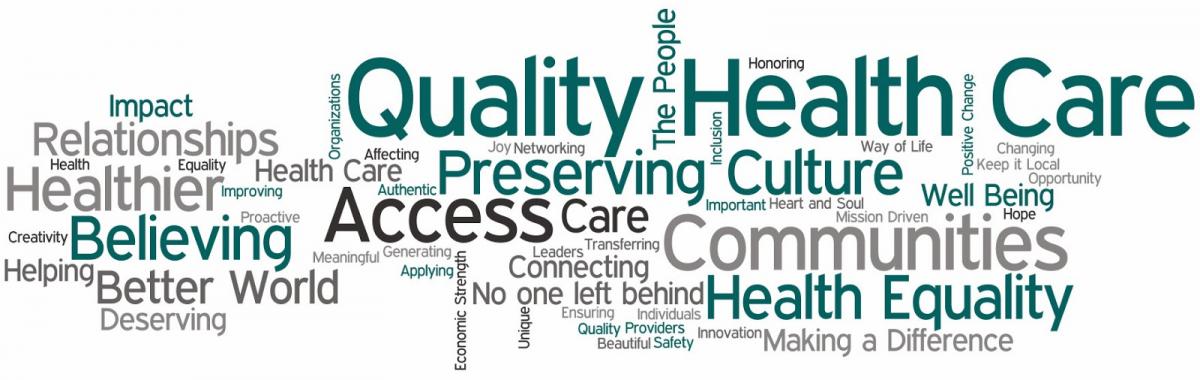
In celebration of National Rural Health Day 2013, staff members at National Rural Health Resource Center created this Wordle in response to the question "What does working with rural health mean to you?"

Tuesday, November 12, 2013

Community: What's in it for us?

Dennis Berens, Board Member, National Rural Health Resource Center


Community is one of those words in our language that is used so often and in so many ways it may not have meaning for us today. So many definitions, so much myth, so much emotion. What's in it for me and you? With four generations alive and operating in our country today, I think this word and its definition could serve as the missing link in our words and actions.

Think about your present definition of community and how many "communities" you live in. I grew up on a farm that was a community. I had ties to a very small town, and there were a number of communities there for me. In the city where I live today, some of my neighbors help me create community. Where else do we find community? Church? State? School? Work?

Those of you who know me have heard me say that community exists among people who are willing to risk for each other. On a ten point scale, you and I must be willing to risk at least at level one for us to be in community. 

For me this definition hits one of the crucial elements in humankind: TRUST. If we will not risk for someone, can we be in a trust relationship? In today's world of instantaneous communication, whom do you trust? And if you cannot trust, can you do business? Can you create meaningful organizations and policies without trust? Can you have real and meaningful relationships? Can you really have working communities?

Think about this word and your definition of it, and then have a "community" discussion about what it means and how we can use it to create a better world. 

Contact the National Rural Health Resource Center to learn how to effectively engage your community in a meaningful conversation about the value of health.